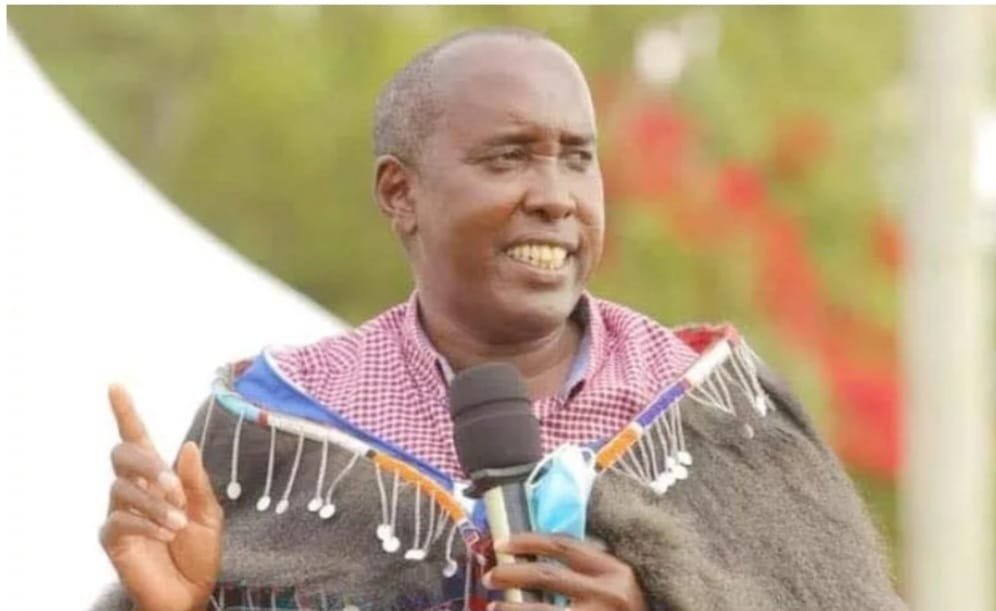
As he launches Freedom for Economic Development Agenda (FEDA), Kajiado Governor Joseph Ole Lenku is positioning himself for a new chapter in national politics, building on his experience in government, corporate leadership and two terms at the helm of Kajiado County.
Kajiado Governor Joseph Ole Lenku is stepping into a new political chapter with the launch of Freedom for Economic Development Agenda (FEDA), a political party founded on four defining ideals: Welfare, Prosperity, Well-being and Justice, in Swahili Haki Na Ustawi - based upon the great Kenyan national anthem.
The initiative marks an important moment in the political journey of a man whose influence has grown beyond Kajiado County to encompass the wider Maa community. With a political support base extending across the six counties where Maa people reside, Ole Lenku is increasingly emerging as a central figure in the community's political organisation and national representation.
The launch of FEDA comes against the backdrop of his declared ambition to contest the Kajiado Senate seat in the 2027 General Election. Having served two terms as governor, Lenku is looking towards the legislative arm of government, where he intends to continue championing devolution, protect development gains and strengthen the representation of his people.
For the former Interior Cabinet Secretary, the new party is also about giving the Maa community an independent political platform through which to negotiate its interests, participate in national decision-making and pursue a broader economic development agenda.
A LEADERSHIP LEGACY ROOTED IN THE MAA COMMUNITY
Joseph Jama Ole Lenku was born on October 20, 1970, in Lenkisim, Entonet Location, in present-day Kajiado County. He comes from the influential Lenku family, a prominent Maasai lineage with a longstanding tradition of leadership.
His father, Lenku Ole Mpaa Kapei, was a senior chief in Kajiado South and a respected leader of the Iterito age-group. His mother, Sentema Lenku, also came from an established Maasai family. His family background placed him within an influential network of traditional leadership and community heritage.
Like many Maasai boys of his generation, his childhood involved herding livestock and participating in the cultural practices and traditional rites of passage that define Maasai society.
His education began at Lenkisim Primary School before taking him through several other schools, including Ilbisil, Nkama and D.E.B. Loitokitok. He later joined Nakuru High School, where he completed his secondary education in 1990.
His academic journey continued at Kenya Utalii College, where he obtained a Diploma in Hotel Management in 1995. He subsequently joined the University of Nairobi, graduating in 2006 with a Bachelor of Commerce degree in Marketing and a Master of Business Administration in Strategic Management.
He also undertook professional training in project management in Greece and corporate governance, adding to his management and leadership qualifications.
His educational background, particularly his postgraduate training in strategic management, would later become relevant to his career in corporate leadership, national government and county administration.
FROM HOSPITALITY EXECUTIVE TO INTERIOR CABINET SECRETARY
Before entering national politics, Ole Lenku established himself in the hospitality and corporate management sector.
He worked with Serena Hotels in Kenya and Tanzania, including an assignment at Serengeti Serena, where he gained experience in hotel operations, institutional management and organisational development.
He subsequently rose to become General Manager of Kenya Utalii College, one of the country's leading hospitality training institutions.
His appointment to the national Cabinet came in May 2013, when President Uhuru Kenyatta named him Cabinet Secretary for Interior and Coordination of National Government.
The appointment placed him at the centre of national security administration, making him responsible for coordinating the country's internal security machinery, police administration and national government operations.
During his tenure, he was associated with police reforms, the decentralisation of security coordination and the implementation of the Nyumba Kumi community policing initiative.
His time at the Interior Ministry was also marked by difficult national security challenges, including the September 2013 Westgate Mall terrorist attack. Despite the controversies surrounding his tenure, the experience placed him within the country's highest levels of executive decision-making.
He left the Cabinet in December 2014, eventually returning to elective politics with his sights set on leading his home county.
THE KAJIADO DEVELOPMENT STORY
In 2017, Ole Lenku entered the Kajiado gubernatorial race and defeated incumbent Governor David Nkedianye, becoming the county's second governor. He successfully defended his seat in the 2022 General Election.
His administration has placed considerable emphasis on healthcare, education, water infrastructure, roads, urban development and land administration.
In healthcare, the county has expanded its network of facilities, strengthened the health workforce and invested in hospital infrastructure. The administration has also prioritised the expansion of healthcare services closer to communities.
Education has been another major focus, particularly through the expansion of Early Childhood Development services, increased bursary allocations and the establishment of additional vocational training centres.
In water development, the administration has invested in boreholes, water infrastructure rehabilitation and solar-powered water systems, responding to the persistent challenges associated with water access in an arid and semi-arid county.
Road development has also featured prominently, with investments in opening, grading, gravel-surfacing and improving connectivity between towns, trading centres and rural communities.
Land administration has been another significant undertaking, particularly the validation of land records, issuance of allotment letters and efforts to address disputes arising from land ownership and settlement.
During his September 2026 development scorecard presentation, Lenku highlighted the scale of these investments.
His administration reported an increase in health facilities from 182 in 2017 to 298, alongside growth in the healthcare workforce from approximately 1,140 to 2,014 personnel.
The county also reported an increase in Early Childhood Development teachers from 480 to 1,500 and an expansion of annual bursary allocations from KSh40 million to KSh300 million.
On water, the administration reported increasing access from 35 per cent to 55 per cent, with 150 boreholes drilled and equipped and another 250 rehabilitated and solarised.
The county further reported opening and grading more than 1,920 kilometres of roads and gravel-surfacing nearly 1,192 kilometres.
These investments form part of the development record Lenku is seeking to consolidate as he prepares for his next political assignment.
BUILDING A POLITICAL HOME FOR THE MAA COMMUNITY
Beyond his achievements in county government, Lenku's political ambitions have increasingly assumed a wider Maa dimension.
The Maa community occupies an important political and economic space across six counties in Kenya. Yet, its representation and bargaining power in national political arrangements have remained recurring subjects of discussion among community leaders.
Lenku's emergence as a political kingpin has been accompanied by growing support across the Maa region, where his leadership is increasingly associated with the pursuit of a more coordinated political voice.
The establishment of FEDA is intended to provide that political vehicle.
Its name, Freedom for Economic Development Agenda, captures the proposed party's emphasis on economic advancement and the ability of communities to determine and negotiate their development priorities.
Its four guiding ideals — Welfare, Prosperity, Well-being and Justice — provide the foundation upon which the party intends to build its political identity.
Welfare speaks to the social and economic conditions of citizens; prosperity focuses on economic opportunities and wealth creation; well-being encompasses the quality of life and access to essential services; while justice speaks to fairness, representation and the protection of people's rights.
For the Maa community, the party offers a framework for consolidating political interests, strengthening negotiations with national political formations and pursuing development priorities across the region.
The initiative also places Lenku within a broader national conversation about the role of community political formations in Kenya's multiparty democracy.
WHY THE SENATE?
Lenku's decision to pursue the Kajiado Senate seat in 2027 is a natural extension of his transition from county executive leadership to national legislative politics.
The Senate is constitutionally mandated to represent counties, participate in legislation concerning county governments and exercise oversight over the national revenue allocated to counties.
These responsibilities are particularly important to a former governor who has spent two terms managing devolved resources and overseeing county development programmes.
His experience in county administration provides him with direct exposure to the opportunities and challenges of devolution, including county financing, service delivery, institutional capacity and the relationship between national and county governments.
Lenku is seeking to use the legislative platform to continue protecting the gains made in Kajiado while advocating for stronger devolution and more equitable development.
His political transition also comes at a time when the 2027 General Election is beginning to shape new alliances, political formations and leadership contests across the country.
A NEW CHAPTER FOR JOSEPH OLE LENKU
From his upbringing in the Maasai community to the corporate boardroom, the Interior Ministry and two terms as Kajiado Governor, Joseph Ole Lenku has occupied several important positions in Kenya's public and political life.
His journey reflects a transition from professional management into national executive leadership, county governance and now an ambitious attempt to establish a wider political platform.
The launch of FEDA represents the latest chapter in that journey.
For Lenku, the immediate political task is to establish the party as a vehicle for economic development, community representation and political participation while preparing for the 2027 Senate contest.
As he looks beyond the governorship, his message is increasingly centred on the importance of welfare, prosperity, well-being and justice, not merely as political slogans but as the foundation of a broader development agenda.
The next chapter of Joseph Ole Lenku's political career will therefore be defined by two closely connected ambitions: taking his experience in Kajiado to the Senate and providing the Maa community with a stronger platform in Kenya's national political landscape.
With FEDA, Lenku is placing a new political proposition before the country: that economic development, community welfare and political representation must remain central to the future of Kenya's governance.